The True Economics of Enterprise AI in 2026: GPU Compute Costs, Model Margins, and Commercial Profitability
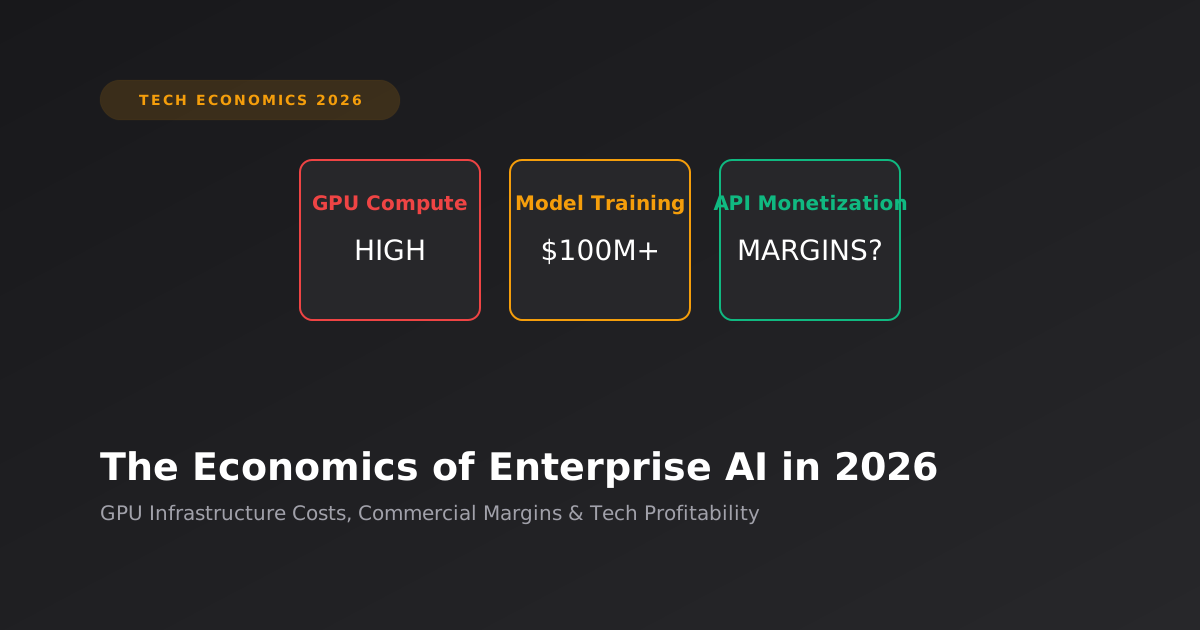
Is Artificial Intelligence a high-margin SaaS goldmine or a capital-intensive hardware sinkhole?
In 2026, tech executives and venture capitalists are scrutinizing AI unit economics like never before. While traditional software boasts 80%+ gross margins, enterprise AI applications frequently operate at 40-50% gross margins due to compute infrastructure costs.
The Cost Structure of Large-Scale AI
AI business expenses split into two massive capital buckets:
1. Model Training Capital (Pre-Deployment)
Training a state-of-the-art frontier model requires clustering tens of thousands of GPUs for months:
Hardware & Energy: $50M - $200M per training run.
Data Curation & Clean Pipelines: Millions spent acquiring high-quality licensing rights.
2. Live Inference Unit Economics (Post-Deployment)
Unlike traditional web servers where serving a static webpage costs fractions of a cent, every LLM output token requires matrix computations across multi-GPU clusters.
How Companies Are Engineering Higher Margins in 2026
Model Routing: Directing easy queries to cheap 8B models and reserving costly 400B models strictly for complex logic.
Prompt & Response Caching: Caching semantic vector queries to serve repeat questions instantly.
Speculative Decoding: Using smaller draft models to guess output tokens, verified in parallel by larger models.
Subscribe to Engineering Insights
Get weekly in-depth technical guides on AI Agents, system architecture, and cloud infrastructure delivered straight to your inbox.