Inside NGINX Internal Architecture: Event-Driven Non-Blocking Web Server Engineering
Traditional web servers like Apache HTTP Server historically spawned a separate OS thread or process for every incoming client connection. When thousands of concurrent clients connected simultaneously, thread context switching overhead consumed all system RAM and CPU resources.
NGINX solved the C10K problem (handling 10,000 concurrent connections) by abandoning the thread-per-connection paradigm in favor of an asynchronous, event-driven, non-blocking master-worker architecture.
The NGINX Process Model
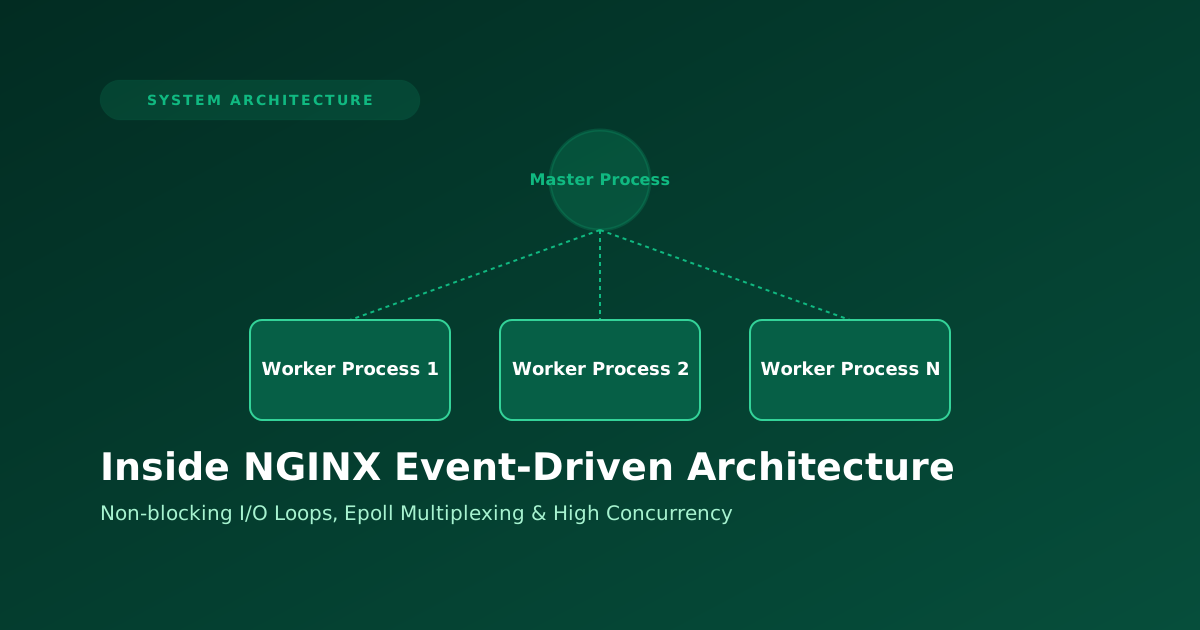
NGINX operates using a single Master Process and multiple Worker Processes:
Master Process: Runs with root privileges, reads configuration files, binds to network ports, and manages worker lifecycle.
Worker Processes: Run as unprivileged users (typically bound 1:1 with CPU cores). Each worker independently processes tens of thousands of HTTP connections without blocking.
The Non-Blocking Event Loop (epoll / kqueue)
Instead of waiting (blocking) for a socket read or network packet, NGINX worker processes register sockets with operating system I/O multiplexers like Linux epoll or FreeBSD kqueue.
When network events occur (e.g., new HTTP connection or request payload chunk ready), epoll notifies the worker's event loop, which immediately processes the event in user space.
Key Takeaways
Sendfile Efficiency: NGINX streams static files directly from kernel page cache to network sockets without copying bytes into memory.
Predictable Memory Footprint: Memory usage remains virtually flat even when active connection counts spike from 1,000 to 100,000.
Subscribe to Engineering Insights
Get weekly in-depth technical guides on AI Agents, system architecture, and cloud infrastructure delivered straight to your inbox.