Modern CI/CD Engineering: Building High-Velocity Automated Deployment Pipelines in 2026
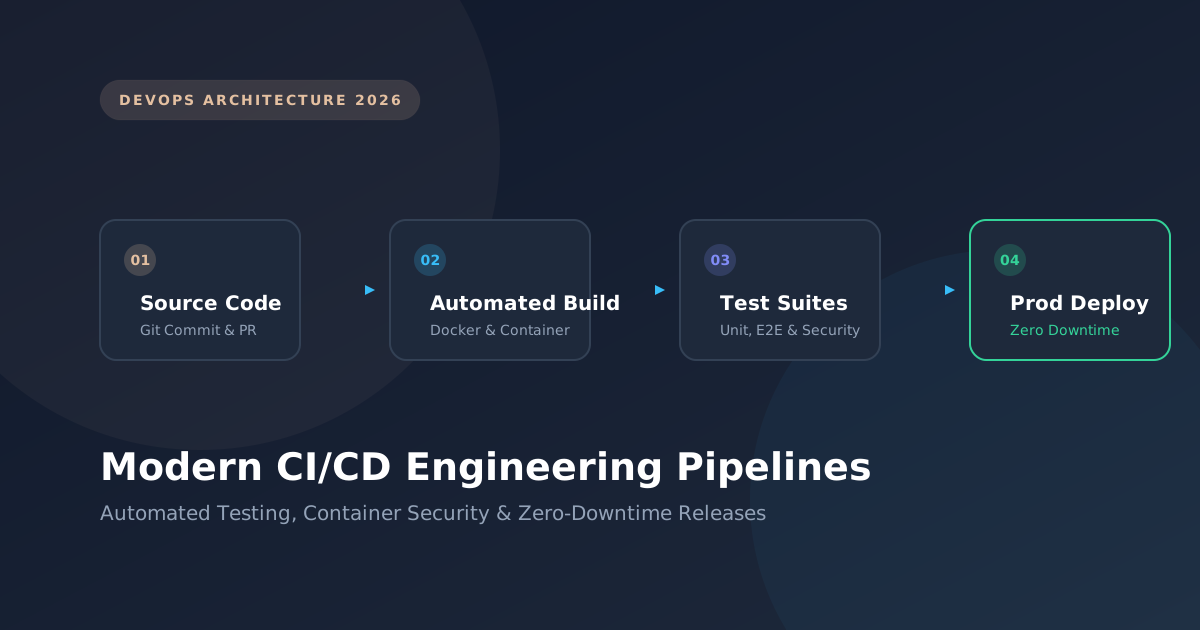
In 2026, software delivery velocity is no longer just a metric for DevOps teams—it is a core business differentiator. Modern continuous integration and continuous deployment (CI/CD) pipelines have evolved far beyond basic script runners. Today's enterprise pipelines leverage parallelized container matrix builds, intelligent dependency caching, automated vulnerability scanning, and zero-downtime progressive delivery strategies.
The Pillars of Modern 2026 CI/CD Architecture
A high-throughput deployment pipeline must fulfill three primary operational guarantees:
Determinism: Builds must be 100% reproducible regardless of the build runner host.
Shift-Left Security: Static analysis (SAST), dependency audit, and secret scanning execute before any artifact enters staging.
Sub-5-Minute Feedback Loops: Developers receive instantaneous test feedback through parallelized matrix runners and layer caching.
Optimizing Container Builds with Layer Caching
Traditional container builds pull fresh dependencies on every pipeline execution. By utilizing distributed build cache backends paired with BuildKit inline caching, production build times drop by up to 85%.
Shift-Left Security & Artifact Verification
Integrating automated vulnerability checks ensures that third-party CVEs are flagged before code reaches staging environments. Security scanners like Trivy and Snyk audit base images and application packages against high and critical severity databases during every build step.
Progressive Delivery: Blue-Green & Canary Rollouts
Rather than updating production instances in-place, progressive deployment strategies ensure zero downtime for end-users:
Blue-Green Deployments: Route live traffic between two identical production environments using a load balancer.
Canary Releases: Gradually shift traffic from 5% to 100% toward new versions while monitoring real-time telemetry metrics.
Key Takeaways for 2026 Engineering Teams
Cache build dependencies aggressively using distributed layer storage.
Enforce cryptographic image signing (such as Sigstore/Cosign) for software supply chain protection.
Automate rollback triggers based on Prometheus HTTP error rate anomalies.
Subscribe to Engineering Insights
Get weekly in-depth technical guides on AI Agents, system architecture, and cloud infrastructure delivered straight to your inbox.